We are


The IDG is one of the oldest and most respected societies of St. Stephen's College, Delhi. It looks to broaden perspectives by discussing a variety of issues with eminent personalities.

Our talks often throw up some very unexpected answers and, even more often, some very unexpected questions.

Tuesday, November 23, 2010


The Informal Discussion Group invites you to an interactive session with
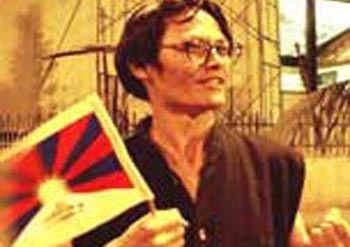
Tenzin Tsundue
(General Secretary, Friends of Tibet - India)
On the topic:
“What Makes an Activist?”

Tenzin Tsundue is a writer and freedom activist of the Tibetan community in exile. His life has been a story of determined activism, having caught international media attention in Mumbai, January 2002, as he displayed the Tibetan national flag and banners in the hotel where Chinese Premier Zhu Rongji was staying. In the year of the 2008 Beijing Olympics, Tsundue led a peaceful march across North India to attempt to cross to Tibet.
Tsundue’s writings have been translated to several languages and published in several national and international publications. As a poet he has represented Tibet in the Second South Asian Literary Conference in New Delhi in 2005 organized by the Sahitya Akademy, and at Poetry Africa 2005, amongst others. In 2001 Tsundue was awarded the Outlook Picador Award for Non Fiction.

Monday, November 22, 2010

A Talk by Barun Mitra: Is Ayn Rand Relevant Today?

The Informal Discussion Group invites you to an interactive session with

Barun Mitra and Vikram Bajaj
On the topic:
“Is Ayn Rand Relevant Today?”

Barun Mitra, founder and director of Liberty Institute, started the “Ayn Rand in India” initiative. The Institute is dedicated to promoting awareness of the basic pillars of a free society – Individual Rights, Rule of Law, Limited Government role, and Free Market. Mr. Mitra also writes on public policy issues. He has received many awards for his work and his contribution to the cause of economic and political liberty.

Mr. Vikram Bajaj is one of the Board of Directors and former Managing Director of Uncle Chipps Company, India. Mr. Bajaj played a key role in promoting the “Ayn Rand in India” initiative. A long time Ayn Rand admirer, he is a part of the Board of Advisors of the Liberty Institute.

Time: 8.00 PM

Date: Wednesday, November 24th, 2010

Venue: Staff Room


Wednesday, November 17, 2010


The Informal Discussion Group, St. Stephen's College
invites you to an interactive session of its Discussion Forum on the topic

VIRTUALLY NO REALITY?: Virtual spaces and their
meanings in the “real” world.

Trace and analyze the profound impact that virtual realities have on our
social behaviour, self-perception and intelligence.
Come, explore the worlds within.

Time: 2:40 PM
Date: Monday, November 22, 2010
Venue: Room XE


The Informal Discussion Group invites you to an interactive session with

Ashish Kothari
(Acclaimed Environmentalist)

on the topic:

The Conservation Conundrum: Tigers, Tribals or Growth?

Mr. Ashish Kothari is a founding member of Kalpavriksh, an environmental NGO which has been active for nearly thirty years now. He has served on many government and international committees relating to sustainable development, protected area management, environmental clearance among other initiatives. In 2000-2004 he was the Technical Coordinator of India’s ambitious National Biodiversity Strategy and Action Plan. Mr. Kothari has been passionately involved in supporting community based conservation initiatives and in coordinating a global network under International Union for Conservation of Nature (IUCN).

Time: 8.00 PM
Date: Monday, November 15th,2010
Venue: Staff Room

Friday, October 8, 2010

The Informal Discussion Group invites you to an interactive session with

S. Anand

(Publisher: Navayana)

on the topic:

The Legacy of B. R. Ambedkar

S. Anand is the co-founder of Navayana, India’s first and only publishing house to exclusively focus on the issue of caste from an anti-caste perspective. Literally meaning ‘new vehicle’- a term given to B.R.Ambedkar’s socially concerned, rationalistic and anti-metaphysical interpretation of Buddhism, the institution publishes the best of socially-engaged writing from India – including the works of Namdeo Dhasal, Meera Nanda, Dilip Menon and Anand Teltumbde. A recipient of the ‘International Young Publisher of the Year’ award and the ‘Ashoka’ fellowship for his work as a social entrepreneur, Mr. Anand is the harbinger of change in the study of caste, highlighting the manner in which it animates aspects of everyday life, so that strategies can be evolved to fight it, especially through mediums of popular culture, such as cinema and sport. Though this task of critiquing and challenging such an entrenched social phenomenon is certainly not easy, Navayana is a vehicle headed in this direction.

Time: 8 PM

Date: Friday, 13th August 2010

Venue: Staff Room


The Informal Discussion Group invites you to an interactive session with

Siddharth Varadarajan

(Journalist: Chief of Bureau, The Hindu)

on the topic:

Negotiating for Peace/Pieces:

The Indo-Pak Equation

Described as ‘one of India's sharpest foreign policy commentators and thinkers,’ Siddharth Varadarajan is the Strategic Affairs Editor of The Hindu and editor of Gujarat: The Making of a Tragedy. He has reported on the NATO war against Yugoslavia, the destruction of the Bamyan Buddhas by the Taliban regime in Afghanistan, the war in Iraq and the crisis in Kashmir. He has also received numerous awards in his field - such as the Elizabeth Neuffer Memorial Prize, and, most recently, the Ramnath Goenka Award for excellence in journalism.

Time: 8 PM

Date: Wednesday, 28th July 2010

Venue: Staff Room


The Informal Discussion Group invites you to an interactive session with

Aditya Nigam

(Political Scientist: CSDS)

on the topic:

The rise of Maoism and the problem of democracy in India

Aditya Nigam, Joint Director of the Programme in Social and Political Theory at the Center for the Study of Developing Societies (CSDS), works in the broad field of social and political theory. He is particularly interested in cultural politics and is engaged in attempting to understand political practices beyond limits of ‘political science’. He is currently working on a longer term project of looking at a counter-history of capitalism from a post-Marxist perspective.

He has published regularly on questions of nationalism, identity and radical politics in both English and Hindi. Nigam is author of several books including ‘The Insurrection of Little Selves: Crisis of Secular-nationalism in India’, ‘After Utopia: Modernity and Socialism in the Postcolony’ and is currently working on a book entitled ‘A Desire Named Development’.

Time: 8 PM

Date: Monday, 2nd August 2010

Venue: Staff Room